

Over the last decade, games have repeatedly turned to styles from the past to shape the visual identity of something new. Pixel art became one of the industry’s strongest go-to languages. Once a technical limitation, it is now used deliberately as visual branding across mobile, console and indie games.
Its familiarity makes it powerful. It also makes it easy to mistake for nostalgia, and that mistake is not a matter of taste. It shows up in licensing spend, in production budgets and, eventually, in retention.
Turn a character into a sprite, add an 8-bit sound, and the audience is expected to feel something before they have even understood why.
The formula is easy to repeat: something old, something borrowed, something pixelated. And sometimes, nothing new.
What nostalgia actually is, and why that matters commercially
Nostalgia can arrive through a shape: a falling block, a maze, a familiar silhouette. It can arrive through a character, a line of dialogue, a pixel typeface or a sound. It has too many doors to treat it like a single recipe, which is exactly why teams keep treating it like one.
Every door carries the same risk. Used as decoration, nostalgia does very little. A retro icon on a button may look familiar, but familiarity alone has no emotional weight. Pixels can carry a memory. They can also function as a filter applied to something that never existed that way in the first place.
What matters is what the reference activates once it enters the game, not how recognizable it is on a slide.
Two cases, one distinction
Two recent cases make the distinction clearer than any framework could, and one of them cost real money to learn.
Some of the most successful ads Clash of Clans has ever run reference Pac-Man and Tetris. One turns a village into the shape of a tetris block. Another sends troops through a base as if they were eating dots inside a maze. Neither reference belongs to Clash of Clans, yet both feel immediately at home there.
Disney Pixel RPG sits on the other side of the argument. The game combines two of the most recognizable languages in popular culture: Disney characters and pixel art. It launched in 2024, reached almost 1.5 million downloads and generated an estimated $3.1 million in lifetime revenue.
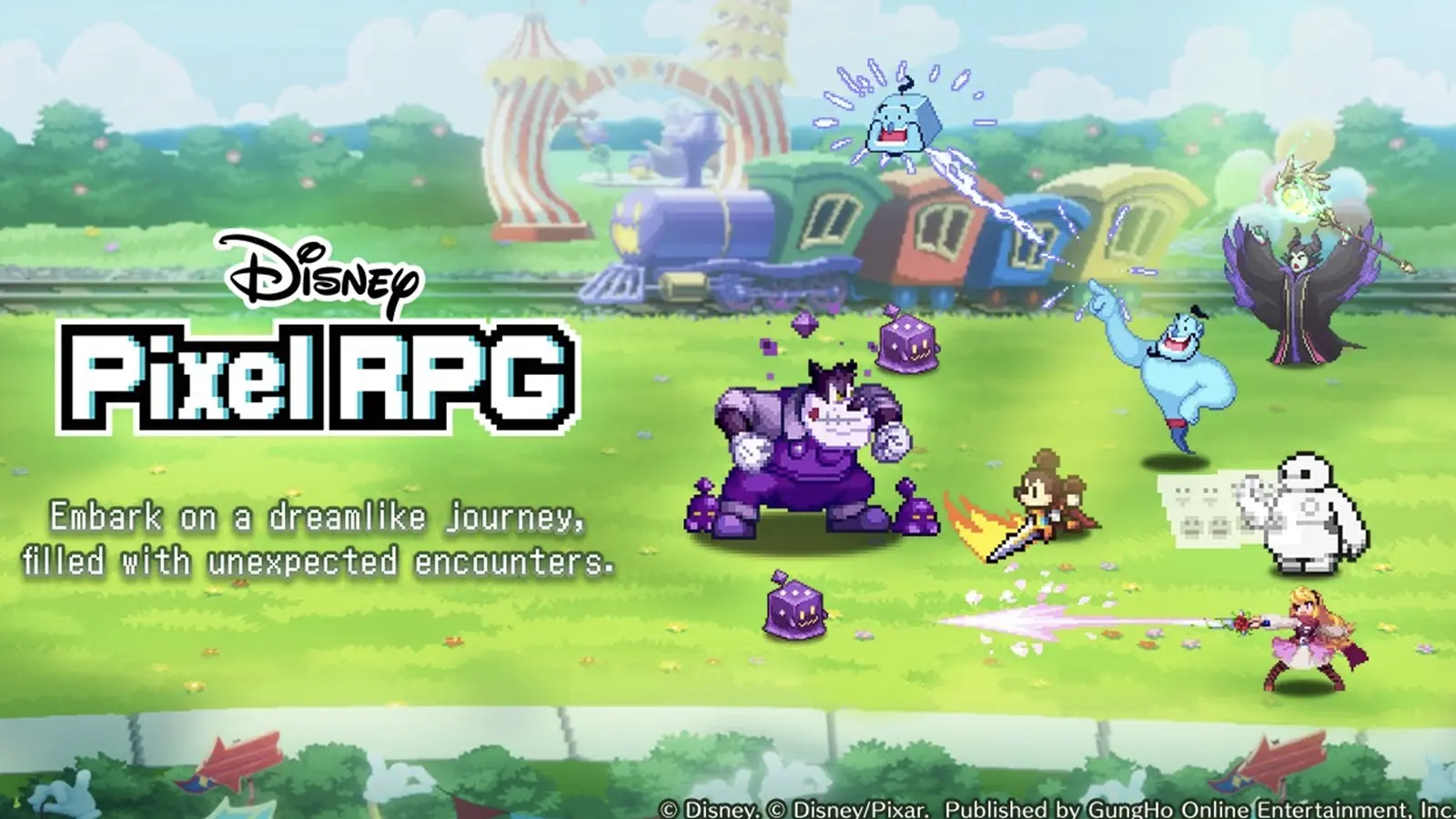
Disney Pixel RPG by GungHo Online Entertainment.
On paper, it had nostalgia to spare, plus a licensing cost that assumed as much. It had a retro aesthetic people instantly understood and characters millions had loved since childhood. By the usual industry formula, something old plus something beloved should have been enough to justify the bet.
Turned out it wasn’t. Its servers will close on September 30, 2026.
No shutdown has a single cause, and downloads, monetization design and live-ops execution all played a role here too. But the assumption worth challenging is the one that greenlit the bet in the first place: that instantly recognizable IP plus an instantly recognizable art style would add up to an emotional response on its own. That is precisely the assumption this piece argues against, and Disney Pixel RPG is the expensive version of testing it.
The problem lies in the relationship between the two ingredients. Disney lives in collective memory through animation, cinema, songs and characters. Pixel art belongs to a different lineage, shaped by arcades, early consoles and games such as Zelda and Pokémon. Turning Disney characters into sprites joins two recognizable things, but it does not automatically recover a shared memory of experiencing Disney that way. Nobody’s childhood memory of Disney is a memory of pixels.
The result is a retro-looking Disney product, with no guarantee of a remembered one.
Pac-Man and Tetris work differently. Their nostalgia lives in more than their appearance. It lives in a playable grammar: the path through a maze, the rhythm of disappearing dots, the silhouette of a falling block, the satisfaction of making pieces fit. Even people who never played the originals can read those forms almost as quickly as they read a traffic light.
Clash of Clans borrows that grammar and gives it a new function. The reference changes how the player reads the village, the troops and the action. It adds an instant layer of meaning while leaving Clash of Clans fully itself, at effectively none of the licensing cost Disney Pixel RPG carried.
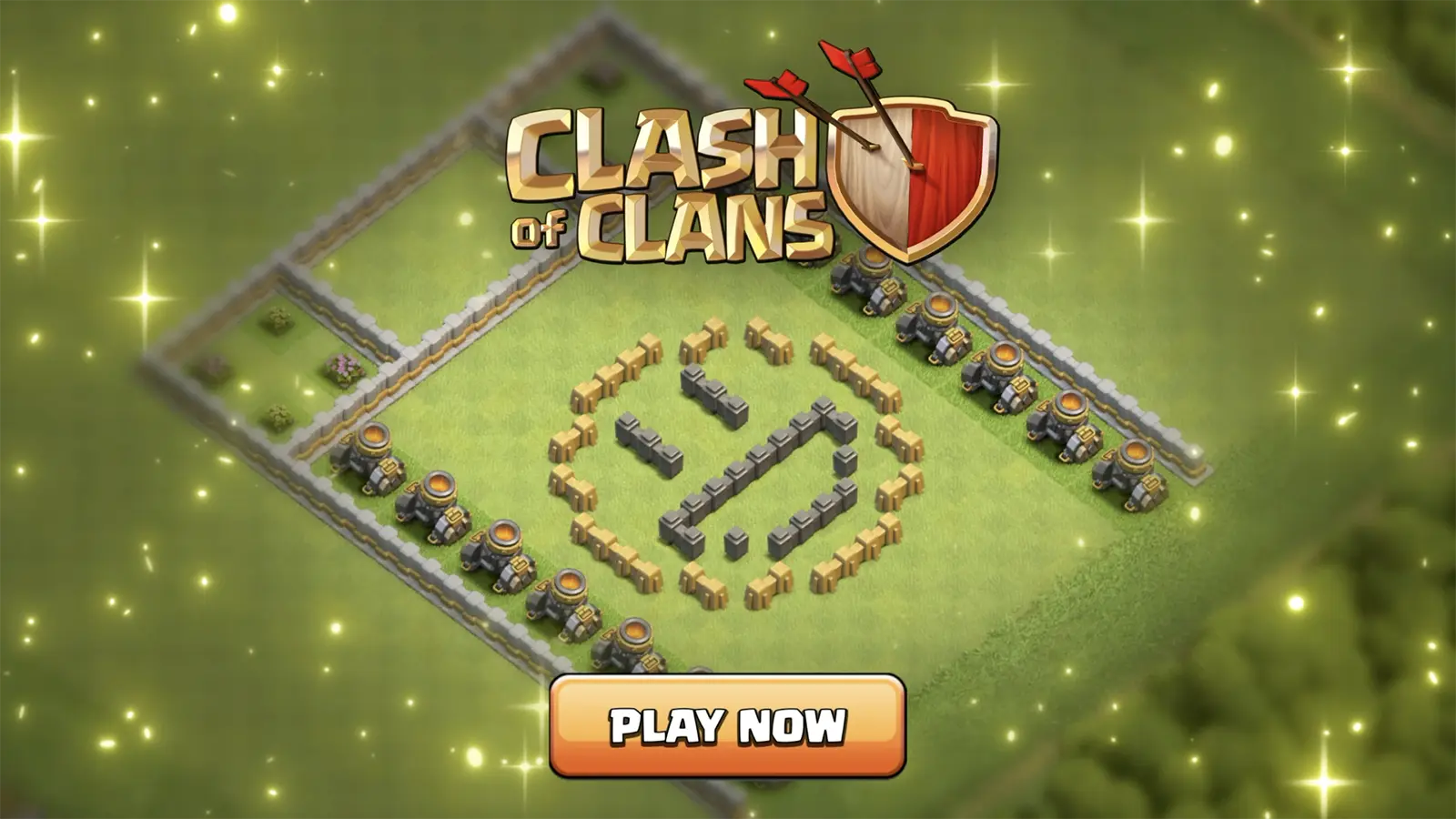
Clash of Clans (Supercell) ad evoking tetris
Disney Pixel RPG borrowed the surface of an era. The Clash of Clans ads borrowed a memory of how games behave. One was expensive to acquire and hard to activate. The other was free and did the work anyway.
Recognition versus reactivation
That difference matters because recognition is brief. A player sees the reference, understands it and moves on. Reactivation goes further. It brings back a familiar rhythm, expectation or feeling, then lets the player experience it again in a new context.
Recognition is what a focus group reports back and what a licensing deck sells. Reactivation is what shows up in retention. Treating the first as a proxy for the second is where the budget gets misallocated.
The distinction is not intuition. Across two decades of work, psychologists Constantine Sedikides, Tim Wildschut and their colleagues1 have found that nostalgic memories tend to gather around meaningful experiences, close relationships and personally significant moments. Recalling them can strengthen meaning, social connection and self-continuity: the feeling that the person you were and the person you are still belong to the same story.
That continuity is the mechanism. The familiar object acts as a cue. The emotion comes from the bridge it opens between past and present, not from the object itself.
A reference with no bridge may still be clever, charming or visually appealing. Its effect usually ends at recognition. This is why nostalgia cannot be evaluated by the fame of the borrowed property or the accuracy of the retro treatment, and why “the IP tested well” is not the same finding as “the IP will retain.”
The practical test, before the deal gets signed
For creative and product work, the test is simple, and it belongs earlier in the process than most teams run it, ideally before an IP deal is negotiated rather than after a game underperforms.
What memory is the idea reactivating, and what can the player do with it now?
If the answer ends with “recognize it,” the nostalgia is still wearing a costume, and no amount of production polish or licensing prestige will change that.
If the reference changes how the player reads, anticipates or experiences the game, the past has become playable again. That is the only version worth paying for.